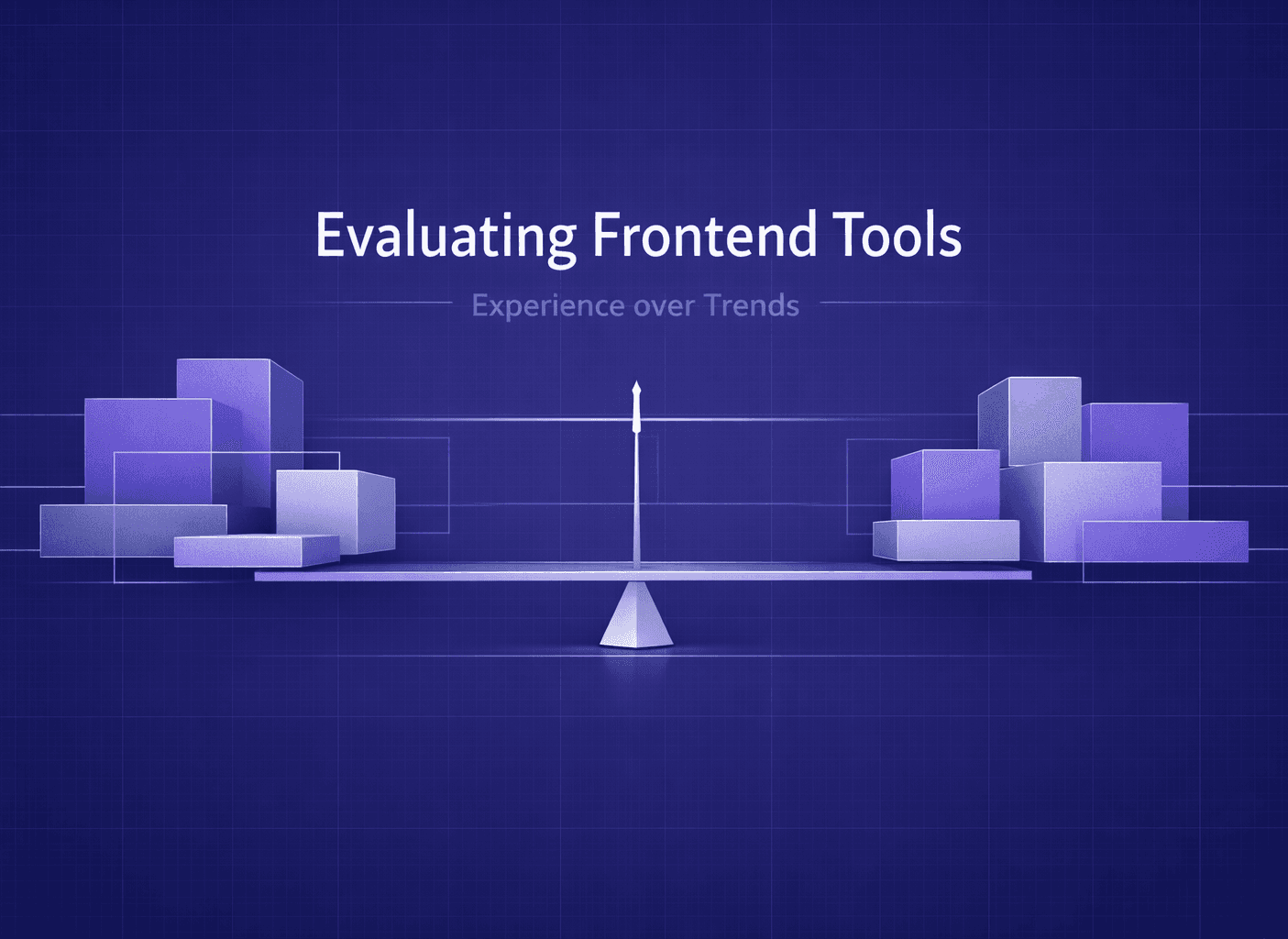
How I Evaluate New Frontend Tools (Without Chasing Trends)
New tools appear in the frontend ecosystem almost daily - especially around React.
Frameworks, libraries, AI tools, build systems. Each promising to be the solution.
As a senior frontend engineer, I’ve learned that my job is not to chase novelty - but also not to dismiss it. The real challenge is knowing when a tool is worth serious attention, and when it’s just noise.
This post is about how I personally evaluate new frontend tools today, shaped by experience, mistakes, and the reality of working in long‑lived systems.
The moments that trigger evaluation
I rarely evaluate tools just for the sake of it.
Most often, it starts with:
- A new side project where I can experiment safely
- A real team problem that needs a better solution
- Curiosity sparked by a talk or a YouTube video
- A limitation in the current stack that becomes painful enough to question
The key is intent.
If there’s no real problem or learning goal, the tool usually isn’t worth the cognitive load.
A healthy level of skepticism
After years in the React ecosystem, skepticism comes naturally.
New ideas emerge constantly - and many of them solve very specific problems. That doesn’t make them bad, but it does mean they’re not universal solutions.
My default mindset today is:
Open, but cautious.
Every tool can be valid in the right context.
But context is everything.
What makes me take a tool seriously
When something catches my attention, I usually evaluate it through a few consistent lenses:
- Developer Experience (DX): Does it genuinely make daily work better, or just different?
- Ecosystem maturity: Is there documentation, community usage, real examples - not just demos?
- Maintenance cost: What does it mean to live with this tool six months or two years from now?
- Learning curve: Can a team adopt this without slowing down or creating knowledge silos?
A tool doesn’t need to excel at everything - but it must be honest about its trade-offs.
Red flags I’ve learned to trust
Over time, certain patterns became clear signals to step back:
- Heavy hype with little discussion of downsides
- Extremely narrow tools presented as general solutions
- Products that are very young and rapidly changing
- Too many breaking changes in a short time window
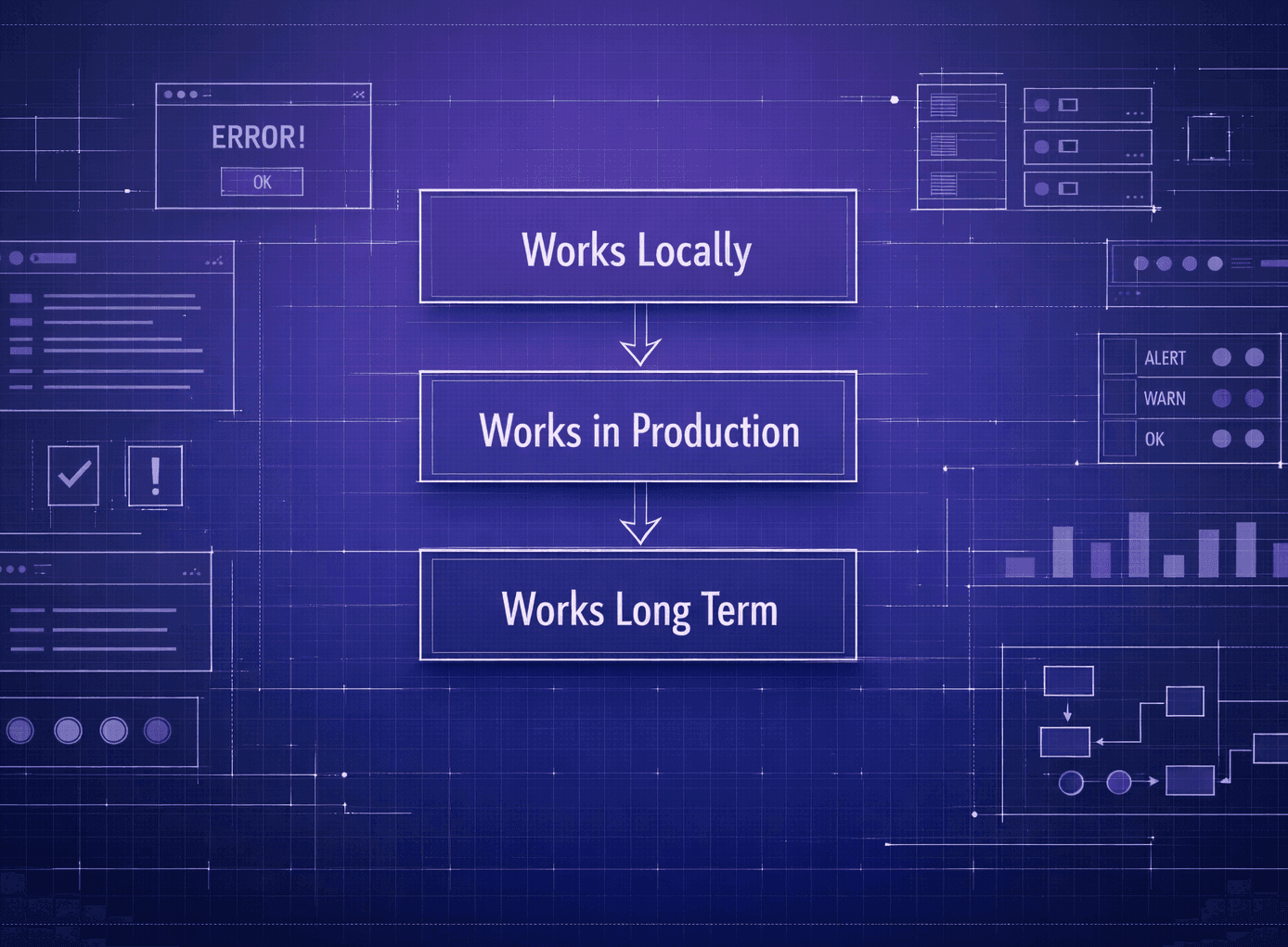
Stability and predictability matter more than novelty in most real-world systems.
Where AI actually helps me today
I use AI tools daily - but very intentionally.
The tools I reach for most often include:
- ChatGPT
- Claude (chat and code)
- Cursor
They help me with:
- Research and quick overviews of trade-offs
- Drafting and exploring ideas
- Prototyping and small POCs
- Working with mock data
- Navigating documentation faster
Used this way, AI is an excellent accelerator - not a replacement for thinking.
Where I’m still cautious with AI
I’m very deliberate about where I don’t rely on AI.
I don’t:
- Delegate full features to it
- Use it for deeply product- or business-specific logic
- Treat generated code as production-ready
Most often, I let AI draft something - and then I refine, reshape, and own the final result.
That balance works well for me.
Lessons from earlier in my career
When I was more junior, I made a common mistake:
adding too many dependencies.
Packages that saved a few lines of code, updated frequently, and introduced hidden risk. Over time, I learned to:
- Question whether a dependency is truly needed
- Lock versions deliberately
- Prefer small, understandable abstractions
Today, I’m much more intentional about what enters a codebase.
Evaluating tools for teams vs solo work
My bar is significantly higher when a tool affects a team.
Beyond technical merit, I ask:
- Can everyone onboard quickly?
- Will this create bottlenecks around “experts”?
- Does it improve collective productivity - or just individual speed?
A great tool for one person can be a burden for a team.
Thinking beyond the present
When choosing tooling, I try to think as far ahead as reasonably possible.
No one can predict the future - but you can look for signals:
- How often does this tool fundamentally change?
- How easy would it be to replace?
- Does it lock us into decisions that are hard to undo?
Longevity doesn’t mean permanence - but it does mean respecting the future cost of today’s choices.
Senior-level takeaway
As a senior frontend engineer, my job when choosing tools is not to use them because of hype,
but to improve developer experience while meeting real client requirements and constraints.
Good tools disappear into the background.
Bad ones demand attention long after the excitement fades.
Conclusion
Curiosity is still important. So is experimentation.
But experience teaches restraint.
The longer I work in frontend, the more I value tools that are boring, predictable, and well-understood - because those are the tools that let teams focus on what actually matters: building products that last.