The Project That Shaped How I Think About Frontend Architecture
Some projects stay with you long after they’re shipped - not because they were flawless, but because they fundamentally shape how you think as an engineer.
This post is about one of those projects for me: a fully dynamic JAMStack platform that I built as the sole developer, early in my career. While the UI appeared simple on the surface, the system underneath demanded careful thinking around architecture, content ownership, permissions, localization, and deployment.
Looking back now, this project shaped the way I think about frontend systems, beyond just writing code.
The core challenge: complexity hidden behind simplicity
At first glance, the product looked like a typical content‑driven website.
In reality:
- Every page and route was driven by a headless CMS
- Content creators fully controlled structure and visibility
- Membership access was tiered and approval‑based
- Localization was built into the system
- The platform had to scale content without constant developer involvement
The challenge wasn’t visual complexity.
It was designing a system that stayed flexible, predictable, and maintainable despite everything being dynamic.
Choosing JAMStack - and owning the full system
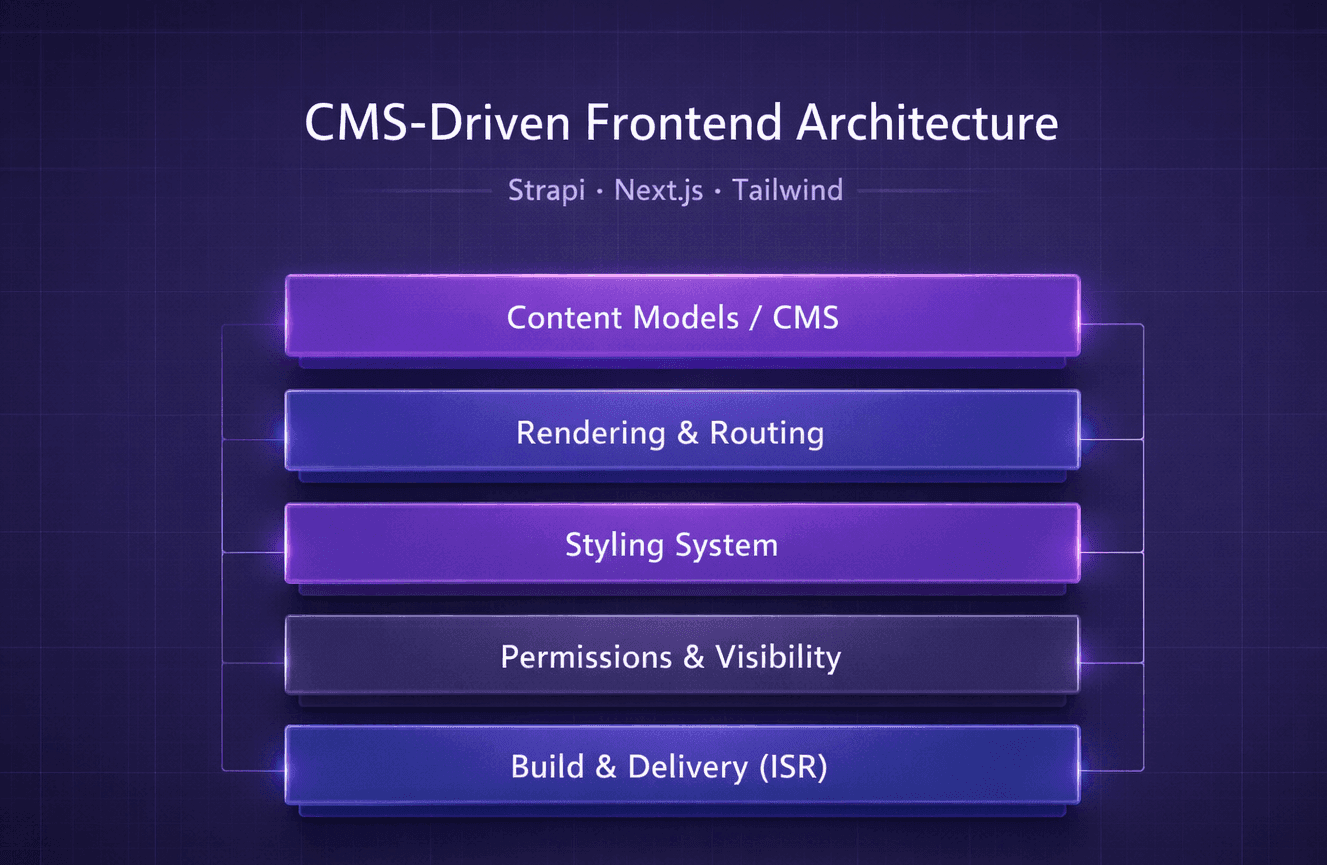
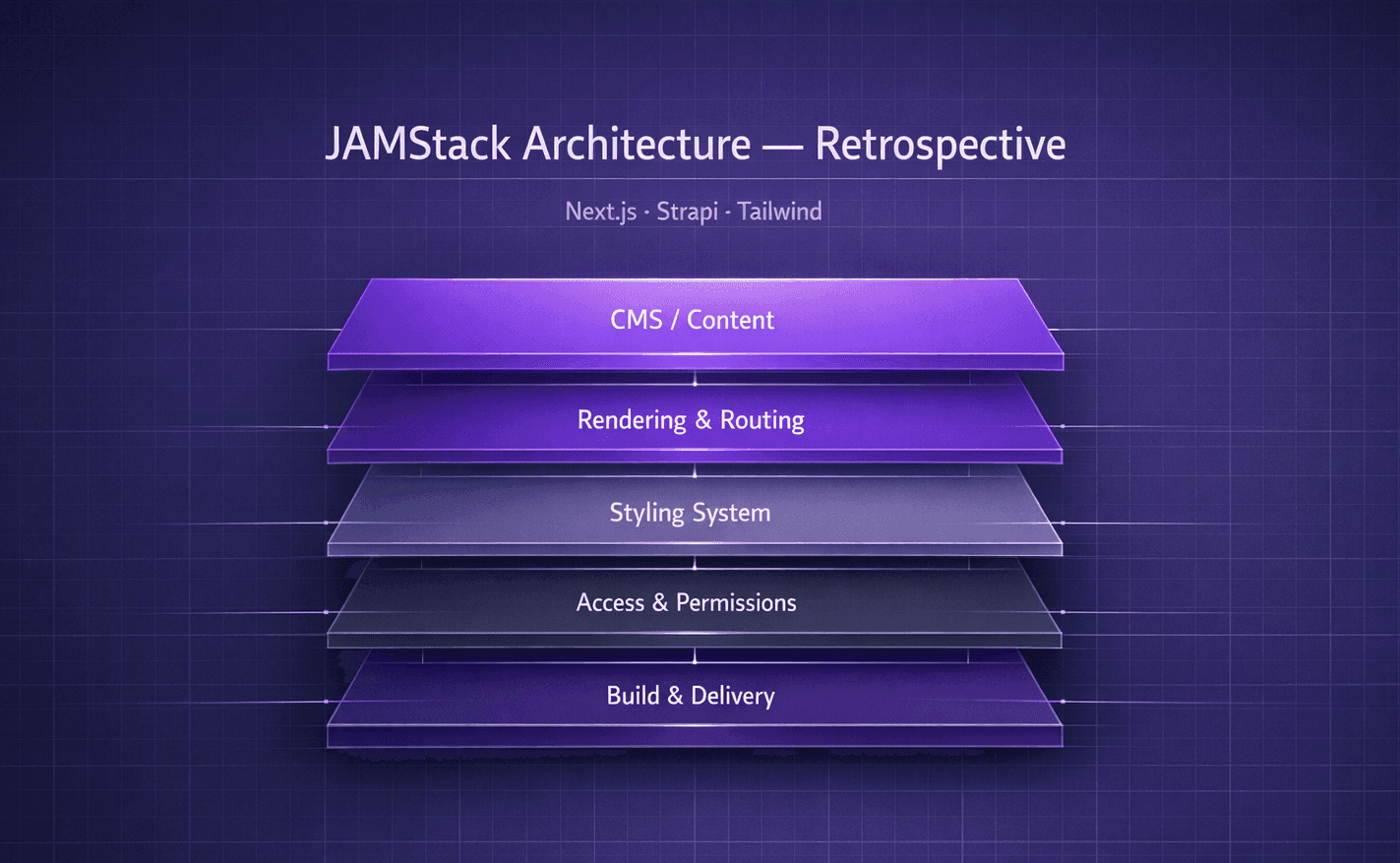
Based on the requirements, I proposed a JAMStack architecture using Next.js, Tailwind CSS, and Strapi.
Strapi’s headless CMS - with its API and admin panel out of the box - allowed me to handle both backend and frontend responsibilities as a single developer. While customization was still required, this setup made it possible to move fast without compromising structure.
I walked through the architectural trade‑offs with my manager and a senior frontend engineer who was also my mentor at the time. We aligned on the approach, and that trust mattered deeply - not just for the project’s success, but for how I learned to reason about technical decisions.
One early lesson that stuck with me:
Good architecture isn’t about being clever - it’s about being aligned with real constraints.
Designing a fully CMS‑driven frontend
When content controls everything, frontend architecture changes.
The questions shift from:
“How do I build this page?”
To:
“How do I make this system survivable when content drives it?”
Some principles that guided the implementation:
- Clear contracts between CMS content types and rendering logic
- Layout primitives instead of page‑specific solutions
- Guardrails that enabled flexibility without chaos
- Explicit handling of partially configured or unexpected content
The goal was never unlimited flexibility.
It was intentional flexibility, shaped by constraints.
Membership tiers and access control
The platform included approval‑based member access, with different levels of visibility depending on a user’s status.
This was my first real exposure to how deeply authorization affects frontend UX - from what users can see before logging in, to how access boundaries are communicated without leaking structure or intent through the UI.
It taught me early that permissions aren’t just a backend concern; they fundamentally shape how users understand and trust a system.
Deployment: redefining what “done” means
Beyond development, I was also involved in the deployment process, working closely with senior engineers and sysadmins whose expertise I deeply respect.
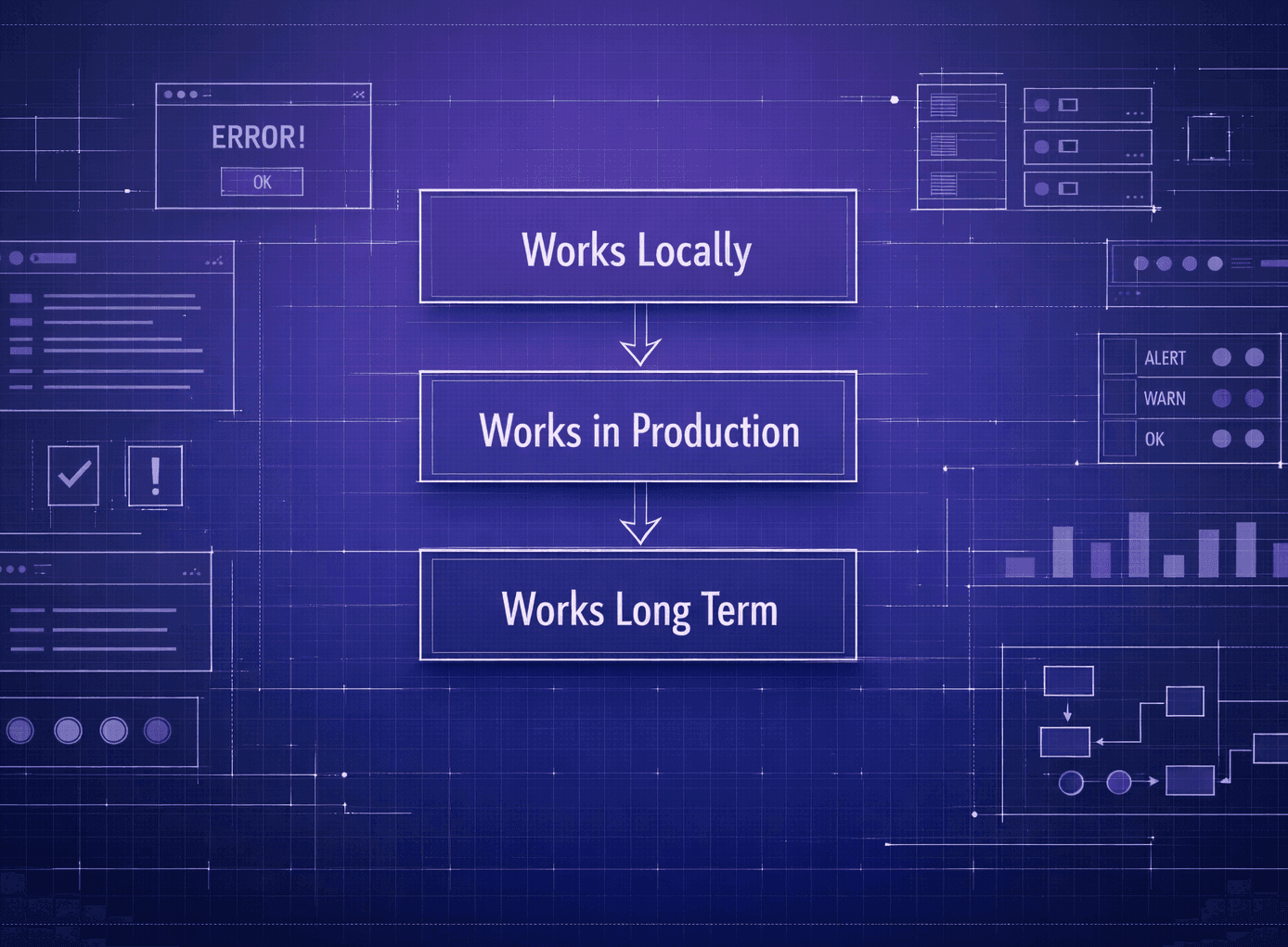
This was my first exposure to CI pipelines, environment separation, and the operational realities of shipping a JAMStack application. Being part of that process reshaped how I think about responsibility as a frontend engineer - “done” stopped meaning it works locally and started meaning it can be deployed, maintained, and trusted in production.
Documentation and handover as part of ownership
After shipping the platform, I wrote internal documentation and recorded tutorial videos for content creators.
That step turned out to be just as important as the code itself.
It reinforced a lesson I still carry:
A system isn’t complete until the people using it can do so confidently and independently.
Trade-offs and lessons learned
Interestingly, if I were to build this project again today - with the same requirements - I would likely make very similar architectural choices.
What would change is not what I built, but how:
- Cleaner abstractions
- Clearer documentation earlier
- Even more explicit boundaries between content and behavior
That realization itself is a sign of growth.
Senior-level takeaways
- Apparent simplicity often hides real architectural complexity
- CMS‑driven systems require strong frontend discipline
- Flexibility without guardrails is just deferred maintenance
- Early exposure to deployment changes how you define quality
- Ownership includes documentation, not just delivery
Most importantly, this project set a foundation for how I think about frontend systems today.
Conclusion
I remain deeply grateful to the company and colleagues who trusted me with this project.
The support from senior frontend engineers, backend collaborators, and sysadmins - people whose work I respect to this day - made this experience both challenging and formative.
This wasn’t just a successful delivery.
It was a project that shaped how I approach architecture, ownership, and collaboration - and many of the decisions I make today still trace back to lessons learned here.